Easy Chimichurri Sauce Recipe – Fresh & Flavorful
Chimichurri sauce recipe perfection awaits! Are you ready to unlock a world of vibrant flavor that can transform your grilling game from ordinary to absolutely extraordinary? I know I was. This Argentinian green sauce, a staple at any good Asado, isn’t just an accompaniment; it’s a culinary star in its own right. What makes chimichurri so beloved? It’s the incredible balance of fresh, herbaceous parsley and oregano, the pungent bite of garlic, the gentle warmth of chili flakes, and that bright, zesty tang of red grape juice vinegar. This isn’t your average condiment; it’s a flavor bomb that sings on grilled meats, roasted vegetables, and even just a simple piece of crusty bread. Mastering a classic chimichurri sauce recipe means you’re armed with a secret weapon for creating unforgettable meals. Let’s get started and bring this deliciousness to your table!
Chimichurri Sauce Recipe
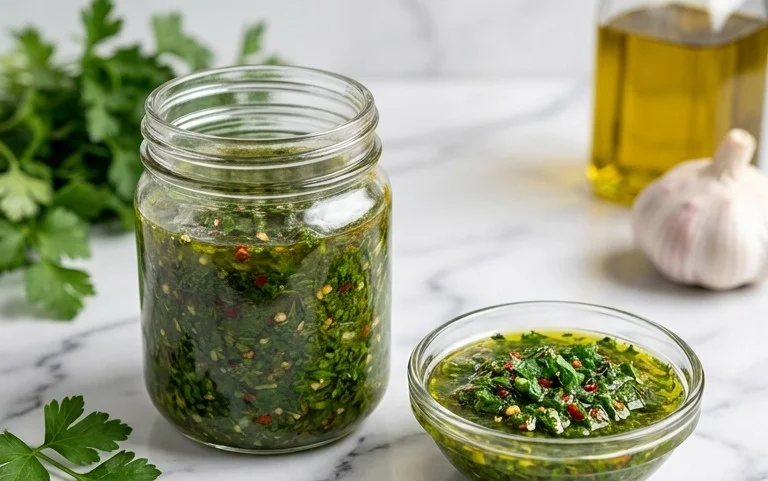
There are few sauces as vibrant, versatile, and utterly delicious as chimichurri. This Argentinian staple is a celebration of fresh herbs, bright acidity, and a touch of heat, making it the perfect accompaniment to grilled meats, roasted vegetables, and even as a zesty salad dressing. Forget those store-bought versions that often lack the depth of flavor; making your own chimichurri is incredibly simple and takes mere minutes. The result is a verdant, aromatic sauce that will elevate any dish it graces. It’s my go-to for adding a punch of flavor to everything from a simple steak to grilled chicken or even as a dip for crusty bread.
The beauty of chimichurri lies in its freshness. The key is to use the freshest herbs you can find. I prefer flat-leaf parsley for its robust flavor, but curly parsley can work in a pinch. Similarly, fresh cilantro and oregano are essential for that authentic taste. Don’t be shy with the garlic – it’s a crucial component that adds a wonderful pungency. The combination of red grape juice vinegar and lemon juice provides that essential tang, while the red pepper flakes offer a gentle warmth that can be adjusted to your preference. And of course, a good quality extra virgin extract olive oil is non-negotiable; it binds all the flavors together and provides a luxurious mouthfeel.
Ingredients:
Making Your Vibrant Chimichurri
The process of making chimichurri is wonderfully straightforward, requiring minimal effort for maximum reward. You have a couple of options for achieving the right texture, depending on your preference. Some people prefer a finely minced sauce, while others enjoy a slightly chunkier consistency. Both are delicious and achievable with a little care.
Step 1: Prepare Your Herbs and Aromatics
Begin extract by meticulously preparing your fresh herbs. This means carefully stripping the leaves from the stems of the parsley, cilantro, and oregano. Stems can be tough and fibrous, and they don’t contribute as much flavor as the leaves, so take your time with this step. Once de-stemmed, give your herbs a good rinse and pat them thoroughly dry with paper towels. Excess moisture can dilute the flavor of your chimichurri. Next, peel your garlic cloves. For the red onion or shallots, a rough chop is all that’s needed at this stage.
Step 2: Mince the Foundation
Now, it’s time to start building the flavor base. You can do this by hand or using a food processor. If you’re going the traditional route, finely mince the garlic cloves. Then, add the roughly chopped red onion or shallots to a cutting board and finely mince them as well. The goal here is to break them down into small, consistent pieces. Next, take your dried herb leaves and finely chop them. It’s important to chop the herbs finely to release their essential oils and create a beautiful green confetti. Once all your aromatics and herbs are finely minced, transfer them to a medium-sized bowl.
Alternatively, for a quicker approach, you can pulse all the prepared herbs, garlic, and onion in a food processor until they are finely chopped. Be careful not to over-process, as you don’t want a paste; you’re aiming for a finely minced texture. If using a food processor, pulse in short bursts, scraping down the sides as needed. Then, transfer this mixture to your bowl.
Step 3: Add the Flavor Enhancers
To the bowl containing your minced herbs, garlic, and onion, it’s time to add the remaining ingredients that will bring this sauce to life. Sprinkle in the red pepper flakes. The amount can be adjusted based on how much heat you enjoy. For a milder sauce, start with 1/4 teaspoon and add more to taste. Next, add the kosher salt. Kosher salt has larger, irregular crystals that dissolve well and provide a clean salinity. Pour in the vibrant red grape juice vinegar, which offers a beautiful color and a classic tangin extractess. Finally, squeeze in the fresh lemon juice. Freshly squeezed lemon juice is always superior to bottled, offering a brighter, more complex acidity. Stir everything together gently to combine.
Step 4: Emulsify with Olive Oil
Now comes the crucial step of incorporating the olive oil. Slowly drizzle in the extra-virgin extract olive oil while continuously stirring or whisking the mixture. This process, known as emulsification, will help the oil and vinegar to combine, creating a cohesive sauce rather than having them separate. Continue to drizzle and stir until all the olive oil has been incorporated and the chimichurri has a beautifully smooth, yet slightly chunky, consistency. The oil will help to meld all the herbaceous and acidic notes, creating a harmonious blend of flavors. If you find your sauce is too thick, you can add a tiny bit more olive oil or a splash more vinegar or lemon juice.
Step 5: Taste and Adjust
This is perhaps the most important step! Before serving, always taste your chimichurri and adjust the seasonings as needed. Does it need more salt? A little more tang from the vinegar or lemon juice? Perhaps a pinch more red pepper flakes for an extra kick? Use a clean spoon to taste and make any necessary adjustments. Remember that the flavors will continue to meld as it sits, so it’s okay if it’s not absolutely perfect on the first taste. Once you’re happy with the balance of flavors, your chimichurri is ready to be served.
Serving and Storing Your Chimichurri
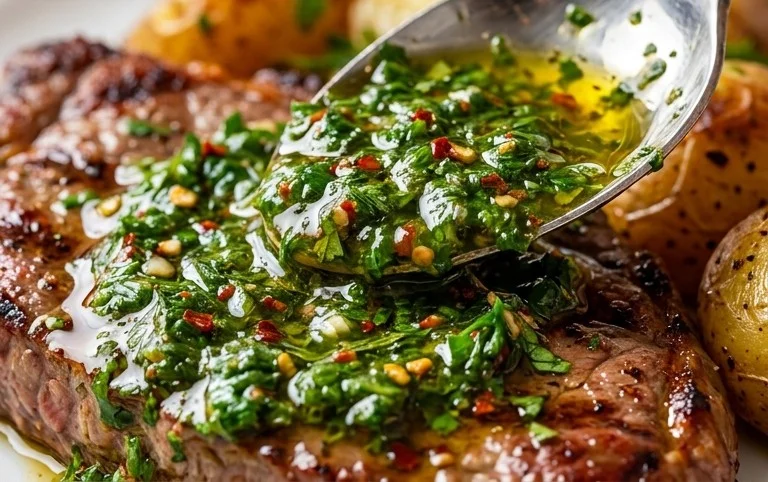
Chimichurri is best served fresh, but it can also be made a few hours in advance, allowing the flavors to deepen and marry. Store any leftover chimichurri in an airtight container in the refrigerator for up to 3-4 days. The olive oil may solidify slightly in the fridge; simply let it sit at room temperature for about 15-20 minutes before serving, and give it a good stir. It’s perfect drizzled over grilled steak, chicken, lamb, or fish, spooned over roasted vegetables, or even as a flavorful spread on sandwiches. I also love to use it as a dressing for potato salad or as a vibrant dip for grilled bread. Enjoy this incredibly flavorful and versatile sauce!
Conclusion:
There you have it – a simple yet incredibly flavorful Chimichurri Sauce recipe that’s about to become your new favorite pantry staple! What makes this chimichurri so great is its vibrant, fresh taste, driven by the perfectly balanced combination of fresh herbs, garlic, and a hint of heat. It’s the ultimate condiment to elevate your grilled meats, roasted vegetables, and even just a simple piece of toast. I truly encourage you to give this Chimichurri Sauce recipe a try; you won’t regret the burst of freshness it adds to any dish!
Beyond its traditional pairing with grilled steaks or chicken, this versatile sauce shines as a marinade, a dipping sauce for empanadas, or even drizzled over fish tacos. Don’t be afraid to experiment! For variations, consider adding a pinch of red pepper flakes for extra spice, a squeeze of lime juice for a tangier profile, or even some fresh parsley to complement the cilantro. The possibilities are endless, and the result is always delicious.
Frequently Asked Questions:
Can I make Chimichurri sauce ahead of time?
Absolutely! In fact, Chimichurri sauce often tastes even better when it’s allowed to meld for a few hours or overnight in the refrigerator. This allows the flavors to deepen and harmonize beautifully. Store it in an airtight container for up to 5 days.
What kind of vinegar is best for Chimichurri?
Red grape juice vinegar is the traditional and most common choice for chimichurri, providing a pleasant tang. However, you can also experiment with apple cider vinegar or even a white grape juice vinegar for slightly different flavor nuances.
My chimichurri is too oily, what can I do?
If your sauce seems a bit too oily, it usually means the oil has separated slightly. Simply give it a good stir before serving, and the oil and herbs should emulsify nicely again. You can also adjust the oil-to-vinegar ratio slightly to your preference in future batches.
Chimichurri Sauce
A vibrant and herbaceous Argentinian sauce perfect for grilling.
Ingredients
-
1 cup fresh Italian flat-leaf parsley, leaves only, stems removed
-
1/4 cup fresh cilantro, leaves only, stems removed
-
1/4 cup fresh oregano, leaves only, stems removed
-
1/3 cup roughly chopped red onion
-
3 cloves garlic, peeled
-
1/2 teaspoon red pepper flakes
-
1/2 cup extra-virgin olive oil
-
1/4 cup red grape juice vinegar
-
3 tablespoons fresh lemon juice
-
1 teaspoon kosher salt
Instructions
-
Step 1
Finely chop the fresh parsley, cilantro, and oregano. -
Step 2
In a food processor or blender, combine the chopped herbs, red onion, and garlic. -
Step 3
Pulse until the ingredients are finely minced. -
Step 4
Add the red pepper flakes, olive oil, red grape juice vinegar, lemon juice, and kosher salt to the food processor. -
Step 5
Process until the sauce is well combined and has a slightly chunky texture. -
Step 6
Taste and adjust seasoning if necessary. -
Step 7
For best flavor, let the chimichurri sit for at least 15 minutes before serving.
Important Information
Nutrition Facts (Per Serving)
It is important to consider this information as approximate and not to use it as definitive health advice.
Allergy Information
Please check ingredients for potential allergens and consult a health professional if in doubt.