French Macaron Recipe – Perfect Homemade Delights
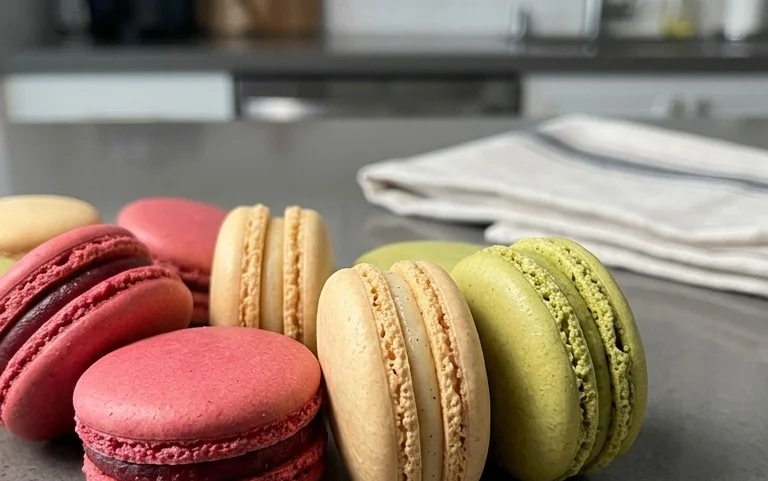
French macarons are more than just a cookie; they are miniature works of art that have captured the hearts and taste buds of dessert lovers worldwide. Their delicate, crisp shell giving way to a delightfully chewy interior, paired with luscious fillings, creates an experience that is simply irresistible. We’re diving deep into the enchanting world of the French macaron today, and I’m thrilled to share a reliable recipe that will help you achieve those iconic ruffled “feet” and perfect texture right in your own kitchen. What is it about these colorful, airy confections that makes them so universally beloved? Perhaps it’s their elegant appearance, the vast array of vibrant colors and sophisticated flavor combinations, or the sheer joy of biting into a perfectly executed French macaron. Get ready to unlock the secrets to making these celebrated treats at home.
French Macaron Recipe
Ah, the French macaron. These delicate, airy meringue cookies sandwiched with luscious fillings are the epitome of French patisserie. They’re often seen as intimidating, a treat reserved for professional bakers. But I’m here to tell you, with a little patience, precision, and the right guidance, you can absolutely achieve macaron perfection in your own kitchen! My journey to mastering these beautiful little cookies has been a delicious adventure, filled with a few failures but ultimately, a lot of sweet success. This recipe is a culmination of what I’ve learned, focusing on the Italian meringue method for a stable and glossy result. Let’s get started!
Ingredients:
Preparing Your Dry Ingredients
The first crucial step is to prepare your dry ingredients. This is where you’ll want to be as precise as possible. Take your 150 grams of almond flour and sift it into a fine powder. If you don’t have super-fine almond flour, you can pulse regular almond flour in a food processor a few times until it’s very fine, but be careful not to over-process it into almond butter! After sifting, measure out 150 grams. It’s vital to measure after sifting to ensure you have the correct amount. Next, add the 180 grams of powdered sugar and the 1/4 teaspoon of salt to the sifted almond flour. Whisk these together thoroughly until everything is well combined. This mixture is often referred to as the ‘tant pour tant’ in macaron making. Set this aside for now.
Making the Italian Meringue
This is where we build the structure and sweetness for our macarons. In a clean, grease-free saucepan, combine the 60 grams of granulated sugar with 40 grams of water. Stir just enough to moisten the sugar, then stop stirring. Place the saucepan over medium heat and bring the sugar syrup to a boil. You want to reach a temperature of 244°F (118°C) on a candy thermometer. While the syrup is heating, place your 120 grams of room temperature egg whites in the bowl of your stand mixer, fitted with the whisk attachment. When the sugar syrup reaches about 230°F (110°C), start whipping the egg whites on medium speed until they form soft peaks. As soon as the sugar syrup reaches 244°F (118°C), remove it from the heat immediately. With the mixer still running on medium-high speed, slowly and carefully drizzle the hot sugar syrup down the side of the bowl into the whipping egg whites. Be very careful not to let the hot syrup hit the whisk directly, as it can splatter.
Once all the syrup has been added, increase the mixer speed to high and continue to whip the meringue until the bowl feels cool to the touch. This will take about 8-10 minutes. The meringue should be glossy, stiff, and hold firm peaks that don’t droop. Now is the time to add your 4 drops of liquid-gel food coloring and the 1 teaspoon of pure vanilla extract. Whip for another minute or so to ensure the color and extract are evenly distributed. The color will intensify slightly as the macarons bake.
Macaronage: The Art of Folding
This is perhaps the most critical and often misunderstood step in macaron making. We need to fold our dry ingredients into the meringue gently but effectively. This process is called ‘macaronage.’ Add about a third of your dry almond flour and powdered sugar mixture to the meringue. Using a large rubber spatula, begin extract to fold the dry ingredients into the meringue. Start by cutting through the center of the mixture and then scraping around the sides of the bowl, bringin extractg the batter up and over. Repeat this motion, gently turning the bowl as you go. After you’ve incorporated the first third, add another third, and repeat the folding process. Finally, add the remaining dry ingredients and continue folding. You are looking for a consistency where the batter flows like ‘lava’ or ‘ribbon.’ When you lift your spatula, the batter should fall off in a thick ribbon that slowly melts back into the rest of the batter within about 20-30 seconds. If the batter is too stiff, it won’t spread enough and your macarons will have peaks. If it’s too runny, they will spread too much and be flat. This takes practice, so don’t be discouraged if your first attempt isn’t perfect.
Piping and Resting
Now it’s time to pipe your macarons. Transfer the macaron batter into a piping bag fitted with a plain round tip (about 1/2 inch). Line two baking sheets with parchment paper or silicone baking mats. Hold the piping bag perpendicular to the baking sheet and pipe small, uniform rounds of batter, about 1 to 1.5 inches in diameter. Leave about 1 inch of space between each macaron. Once piped, gently but firmly tap the baking sheets on the counter several times. This helps to release any air bubbles trapped in the batter, which can cause hollow macarons or cracked shells. You can also gently poke any visible air bubbles with a toothpick.
After piping and tapping, your piped macarons need to rest. Leave them at room temperature for about 30-60 minutes, or until they form a skin. You’ll know they’re ready when you can gently touch the surface of a macaron and it doesn’t stick to your finger. This skin formation is essential for developing the characteristic ‘feet’ of the macaron during baking.
Baking to Perfection
Preheat your oven to 300°F (150°C). It’s important to have a reliably calibrated oven for macarons, as temperature fluctuations can ruin them. Place one baking sheet at a time on the middle rack of your preheated oven. Bake for 12-15 minutes. You’ll know they’re ready when the tops are firm and don’t jiggle when you gently touch them, and the feet have risen nicely. Avoid opening the oven door too early, as this can cause them to deflate. Once baked, carefully slide the parchment paper or silicone mat off the baking sheet onto a wire rack to cool completely. Do not try to remove the macarons from the paper while they are warm, as they will likely stick.
Filling and Maturing
Once your macaron shells have cooled completely, it’s time to fill them! Pair up your shells by size. Pipe your chosen filling, such as the vanilla buttercream, onto the flat side of one shell, then gently sandwich it with another shell. For the best flavor and texture, macarons benefit from a period of maturation. Store the filled macarons in an airtight container in the refrigerator for at least 24 hours before serving. This allows the flavors to meld and the shells to soften slightly, creating that perfect chewy texture. Enjoy your beautiful, homemade French macarons!
Conclusion:
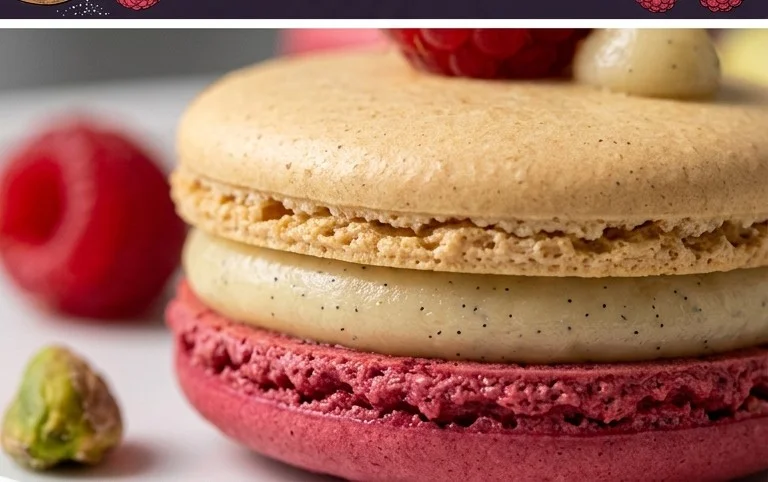
Creating these beautiful French macarons at home might seem intimidating, but as you’ve seen, with careful attention to detail and a touch of patience, it’s entirely achievable and incredibly rewarding! This French macaron recipe delivers that perfect, delicate shell with a slightly chewy interior, a truly delightful texture that’s synonymous with this classic French confection. The joy of mastering this recipe is immense, opening up a world of flavor possibilities for your next celebration or simply as a special treat.
I love serving these exquisite little cookies as part of a dessert platter, alongside coffee or tea, or even as a unique wedding favor. For a truly decadent experience, consider sandwiching them with rich ganaches, creamy buttercream, or even a tangy fruit curd. Don’t be afraid to experiment with different flavor extracts and food colorings to create a spectrum extract of delicious hues and tastes. Think lavender, rose, pistachio, or even coffee! I wholeheartedly encourage you to give this French macaron recipe a try. The satisfaction of biting into your own homemade macaron is unparalleled.
Frequently Asked Questions:
Why are my macarons cracking?
Cracking often happens due to over-whipped egg whites, an oven that’s too hot, or opening the oven door too early during the baking process. Ensure your meringue is stiff but not dry, and avoid peeking at your macarons until they are almost done.
My macarons are hollow. What went wrong?
Hollow macarons can be a result of under-whipped meringue, improperly folded batter (overmixing or undermixing), or oven temperature issues. Ensuring your meringue is perfectly stiff and that your batter has reached the ‘lava-like’ consistency is crucial. Baking them for the correct amount of time at the right temperature is also key.
Can I make macaron shells ahead of time?
Absolutely! Once baked and completely cooled, you can store the macaron shells in an airtight container at room temperature for a couple of days, or in the refrigerator for up to a week. They often taste even better after a day, as the filling has a chance to soften the shells slightly.
French Macaron Recipe
A classic recipe for making delicate and delicious French macarons with a vanilla buttercream filling.
Ingredients
-
150 grams sifted super-fine almond flour
-
180 grams powdered sugar
-
1/4 teaspoon salt
-
120 grams large egg whites (at room temperature)
-
60 grams granulated sugar
-
4 drops liquid-gel food coloring
-
1 teaspoon pure vanilla extract
-
Vanilla Buttercream Frosting (or your choice of filling)
Instructions
-
Step 1
Combine sifted almond flour, powdered sugar, and salt in a food processor and pulse until finely combined. Sift the mixture into a large bowl, discarding any large pieces. -
Step 2
In a separate clean bowl, beat the egg whites until frothy. Gradually add the granulated sugar, continuing to beat until stiff, glossy peaks form and the meringue is smooth and no longer gritty. -
Step 3
Gently fold the food coloring and vanilla extract into the meringue until evenly distributed. -
Step 4
Add about one-third of the almond flour mixture to the meringue and fold gently. Continue adding the remaining almond flour mixture in two more additions, folding until the batter reaches a ‘lava-like’ consistency where it flows smoothly from the spatula in a ribbon. -
Step 5
Transfer the batter to a piping bag fitted with a round tip. Pipe small, uniform rounds onto baking sheets lined with parchment paper or silicone baking mats, leaving space between each macaron. -
Step 6
Tap the baking sheets firmly on the counter several times to release any air bubbles. Let the macarons sit at room temperature for 30-60 minutes, or until a skin forms on the surface. -
Step 7
Preheat your oven to 300°F (150°C). Bake for 12-15 minutes, or until the macarons have developed ‘feet’ and are firm to the touch. Rotate the baking sheets halfway through baking if necessary. -
Step 8
Allow the macarons to cool completely on the baking sheets before carefully peeling them off. Pair matching macaron shells and fill with your chosen filling, such as vanilla buttercream frosting.
Important Information
Nutrition Facts (Per Serving)
It is important to consider this information as approximate and not to use it as definitive health advice.
Allergy Information
Please check ingredients for potential allergens and consult a health professional if in doubt.